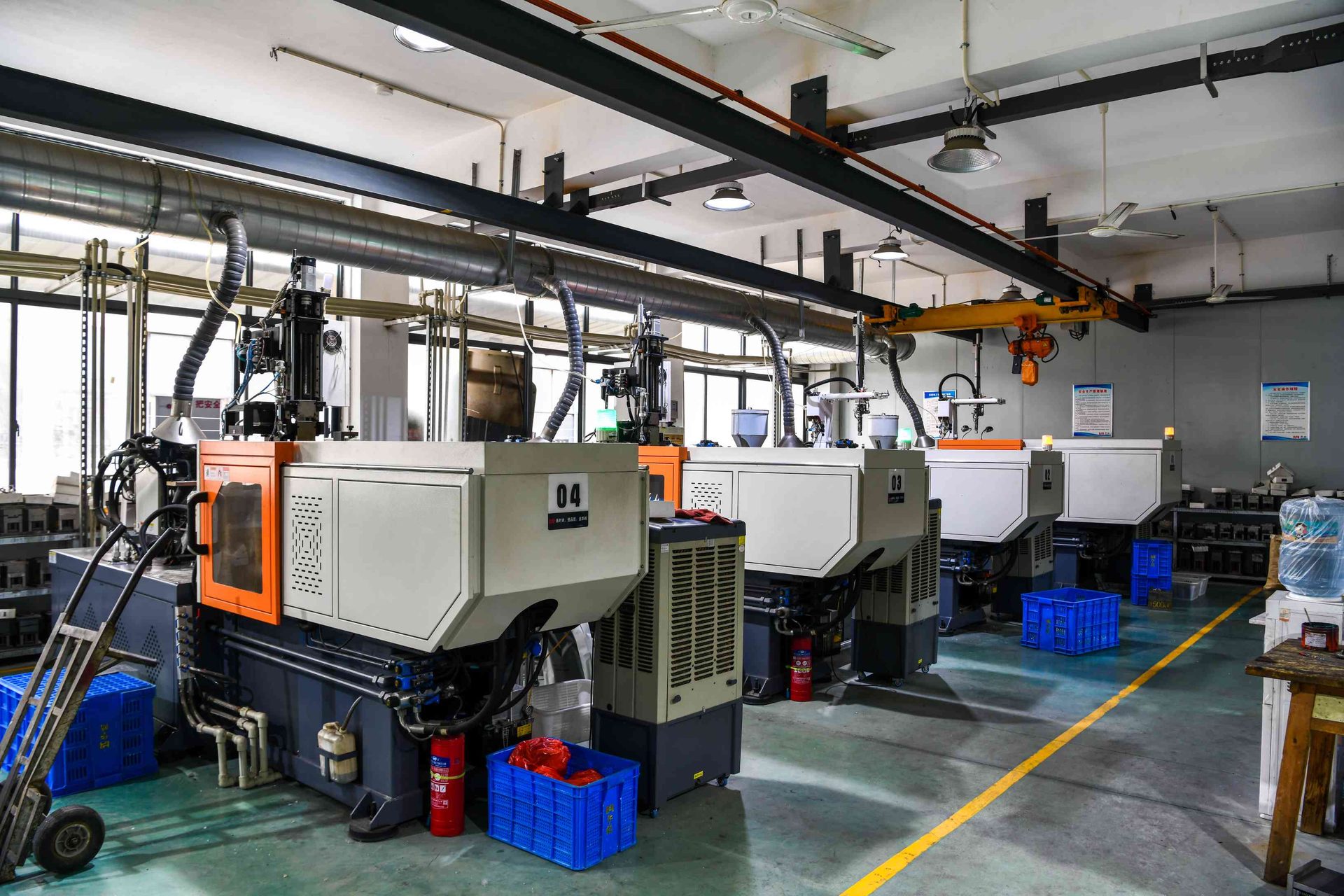
TR90 frames are often sold with one simple claim: they are light and flexible. Those qualities may be useful, but they do not tell a buyer which resin was used, how the tool was built, whether every cavity produces the same dimensions, or whether the finished frame will hold its lenses and alignment through normal use.
Direct answer: source TR90 eyewear as an injection-molded product system, not as a material name. Lock the resin, color route, tool and cavity revision, inserts, hinges, critical dimensions, lens interface, surface standard and validation plan. Approve production-intent molded parts and the finished assembled frame, then control material and process changes by lot and revision.
Understand what the TR90 label does—and does not—specify
In eyewear, TR90 generally refers to a flexible, lightweight thermoplastic from the polyamide family. In commercial conversations, however, the term can be used broadly. A handwritten “TR90” entry on a quotation is therefore not enough to establish composition, grade or performance.
Ask the supplier to identify the resin manufacturer and exact grade or an agreed equivalent under a controlled approval. Record colorant, additives and any claimed recycled content separately. Request the documentation needed for the finished product and destination market, but do not confuse a raw-material declaration with proof that the complete frame complies.
The frame-material comparison helps choose between TR90, acetate, titanium and metal. This guide begins after TR90 has been selected and focuses on making the injected frame repeatable.
Map the manufacturing flow before requesting a quote
| Stage | Main production decision | Buyer evidence to request |
|---|---|---|
| Resin and color preparation | Approved grade, lot control, conditioning and masterbatch route | Material code, lot identity and color standard |
| Tooling and trial | Parting line, gates, vents, cooling, cavities and replaceable inserts | Tool/cavity revision and trial report |
| Injection and cooling | Validated machine setup and stable process window | First-off checks and cavity-separated records |
| Trimming and finishing | Gate removal, flash control, surface texture, printing or coating | Boundary samples and cosmetic criteria |
| Hardware and assembly | Molded-in or post-installed inserts, hinges, screws and temple system | Pull/function checks and component revisions |
| Glazing and alignment | Lens geometry, groove/bevel interface and frame adjustment | Finished-frame sample and inspection record |
The sequence varies by construction. The purpose of the map is not to dictate a factory’s machine settings; it is to expose the interfaces that must be approved and traced.
Specify the resin, color and surface as separate controls
A practical specification should include:
- Material identity: supplier, grade, approved alternative policy and evidence required for chemical or product claims.
- Material handling: storage and preparation according to the resin supplier’s technical instructions, with lot segregation where needed.
- Color route: natural resin plus masterbatch, pre-colored resin or a defined surface treatment; reference the approved physical color standard.
- Appearance: gloss or texture, flow lines, weld lines, sink, streaks, burns, contamination, flash and gate witness limits by visible zone.
- Marking and decoration: logo process, location, adhesion or durability check and acceptable interaction with the substrate.
Matching a Pantone reference at one point does not prove an acceptable frame. Curvature, texture, thickness and lighting affect appearance, and a molded color cannot always reproduce a screen value. Use the approval method in the eyewear color-matching guide and retain a signed boundary sample.
Design tooling around the finished frame
New geometry normally requires injection tooling, but a tool price alone says little. Define the frame-front and temple tools, cavity count, slides, cores, interchangeable inserts, texture, expected identification marks and revision. Agree who owns and may use the asset, where it is stored, how trial corrections are approved and what happens if it is moved or retired. The custom eyewear tooling guide provides a fuller ownership checklist.
Tool design and molding behavior influence gate witness, parting line, weld-line location, warpage and shrinkage. These in turn affect bridge shape, lens opening, hinge position and left-right symmetry. Critical dimensions should be checked by cavity; pooled measurements can hide one drifting cavity.
Treat inserts, hinges and lenses as molded interfaces
The polymer body does not work alone. A metal insert may be molded in or installed after molding, while the hinge may be screwed, pinned or integrated into another assembly. Specify insert geometry, orientation, surface condition, position and retention method. Inspect for cracking, movement, exposure and local distortion after assembly and relevant conditioning.
Lens fit also depends on the real molded geometry. Define the lens shape data, retention construction, groove or bevel interface, allowable insertion condition and final optical requirements. An undersized lens may not retain; an oversized lens can load and distort the frame. Approve the production-intent frame with the intended lens rather than checking the two parts separately.
Approve samples from a production-intent process
Add these gates to the custom eyewear sampling process:
- Freeze the resin, colorant, tool revision, cavity identity, inserts, hinge and lens specification.
- Review first-off parts from every cavity for dimensions, weight, symmetry and defined cosmetic zones.
- Assemble using production-intent hardware, fixtures and operations.
- Check lens retention, hinge movement, temple opening, frame alignment, markings and wearer-contact surfaces.
- Run agreed mechanical, thermal, humidity, perspiration/chemical and decoration checks where relevant to the use case.
- Recheck dimensions, whitening, cracking, warpage, insert movement, finish and function after conditioning.
- Approve a golden sample plus measurable limits and retain the material, tool, cavity and process revisions behind it.
Avoid universal molding temperatures, pressures, bend angles or cycle counts copied from another design. The resin supplier and molder must establish the process window; the product team must define performance tests and acceptance limits for the actual frame.
Control bulk production by cavity and lot
At incoming inspection, verify material code, lot and packaging identity against the release. At molding startup and after interruptions, check first-off parts. During production, retain cavity identity where feasible and monitor the agreed dimensions and defects at a frequency based on process risk.
Final checks should cover color and surface, sharp flash, gate trimming, dimensions, left-right symmetry, inserts, hinges, screws, lens seating, alignment, markings and packaging. Add finished-goods points to the eyewear pre-shipment inspection checklist, but remember that a final inspection cannot reconstruct missing resin or process traceability.
Any change to resin source or grade, masterbatch, additive, regrind policy, tool or cavity, insert, machine/process route, decoration or lens interface requires a documented impact review. Revalidation depth should follow the risk, and the first affected production lot must be identifiable.
Send an RFQ that makes suppliers comparable
Provide 3D and 2D data, size and critical dimensions, intended product and user, resin requirements, colors and surfaces, insert/hinge/lens construction, branding, test and market requirements, quantity by SKU, packaging, schedule and tooling terms. Ask the supplier to identify assumptions and proposed alternatives instead of silently filling gaps.
Chemical restrictions, labeling, mechanical performance, children’s-product rules and sunglass or optical requirements differ by market and product class. Before production, have the responsible importer, qualified laboratory or compliance adviser confirm the current requirements and test plan for each destination. A material trade name alone is never a compliance conclusion.
Discuss a production-ready TR90 eyewear specification with HAO Eyewear.