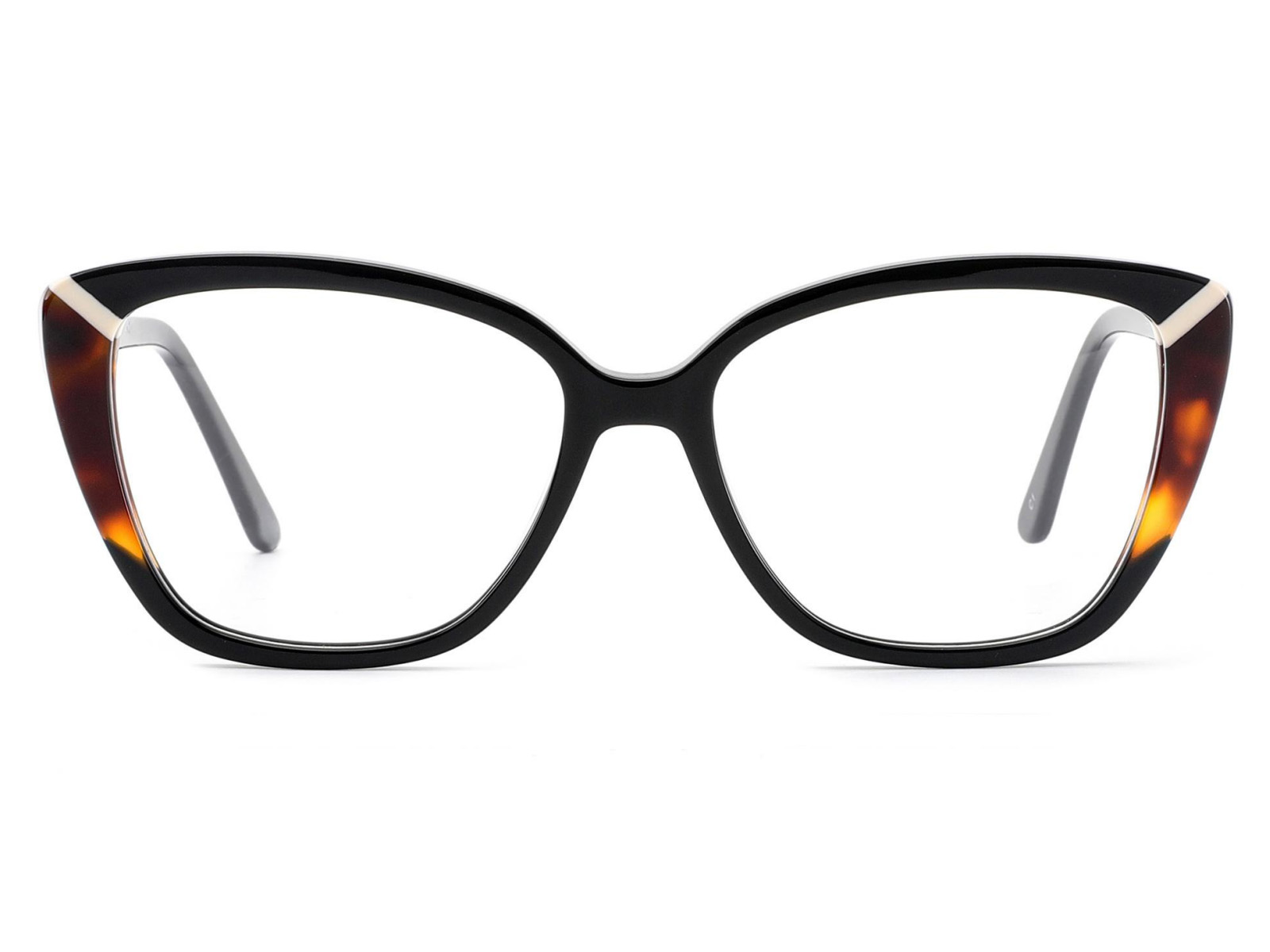
Pick up almost any pair of glasses, look on the inside of one arm, and you’ll find a small string of numbers like 52□18-140. Most people have no idea what they mean — yet those three numbers are the single most important thing for whether a frame fits. This guide explains what each measurement is, where to find it, the typical ranges, and — for brands and buyers — how to specify size on a custom order so a factory can build to fit.
Key takeaways
- Three core numbers — lens width, bridge width and temple length, all in millimeters.
- 52□18-140 means 52 mm lens, 18 mm bridge, 140 mm temple; the □ separates lens width and bridge.
- Find them inside the temple, near the hinge — or measure a frame you own with a mm ruler.
- For OEM orders, specify lens width, bridge, temple and lens height, plus target total width and fit preference.
What do the numbers on glasses mean?
The string printed inside the temple is the frame’s size, in millimeters. The standard format lists three measurements:
| Measurement | What it is | Typical adult range |
|---|---|---|
| Lens width (eye size) | Width of one lens at its widest | 40–62 mm (most 50–56) |
| Bridge width | The gap between the two lenses | 14–24 mm (most 16–20) |
| Temple length | The arm, from hinge to tip | 135–150 mm (most 140–145) |
| Lens height | Top-to-bottom of the lens | 30–45 mm (matters for progressives) |
A small square symbol — □, the “boxing” mark — sits between the lens width and the bridge (so 52□18 means a 52 mm lens and an 18 mm bridge). The third number, after a dash, is the temple. Lens height isn’t always printed, but it matters for taller lenses and progressive lenses.
Lens width (eye size)
Lens width — also called the eye size — is the horizontal width of a single lens at its widest point. It’s the first number and the one most people mean by “frame size.” Larger lens widths read as bigger, bolder frames; smaller widths read as more delicate. Because it’s measured per lens, two frames with the same lens width can still look different depending on shape — a round and a rectangle at 52 mm occupy the face differently.
 Two frames can share a lens width yet fit and look different — shape and bridge change how the size reads on the face.
Bridge width
The bridge is the gap between the two lenses — the part that sits over the nose. A wider bridge suits wider or lower nose profiles; a narrower bridge suits narrower noses. Bridge width works together with lens width to set the overall front size and where the frame sits. On metal frames with adjustable nose pads, fit can be fine-tuned after the fact; on acetate frames with a fixed saddle bridge, the molded bridge does all the work, so getting it right matters more.
Temple length
The temple is the arm that runs from the hinge, over the ear, to the tip. Temple length sets how far back the frame reaches and how securely it holds. Most adult temples are 135–150 mm, with 140 and 145 the most common. Too short and the frame pinches or won’t reach; too long and it slips. Temple style matters too — skull temples curve down behind the ear, library temples are straight (easy to slip on and off), and cable temples wrap fully, common in kids’ and sports frames.
Other measurements that matter
Beyond the three printed numbers, two more are worth knowing:
- Lens height — the top-to-bottom height of the lens. Critical for progressive and bifocal lenses, which need enough vertical room, and for deep or oversized shapes.
- Total frame width — the full width across the front, temple to temple. It isn’t printed, but you can estimate it as roughly (2 × lens width) + bridge + end pieces (≈6–10 mm). It’s the best single number for matching a frame to overall face width.
How to find or measure your size
The fastest way is to read it off a frame you already own: look inside one temple near the hinge, where you’ll usually see something like 52□18-140, often after the model and color code. If it’s worn off or missing, measure with a millimeter ruler — lens width across one lens, bridge across the gap between lenses, and temple along the arm including the curve. A frame that already fits you well is the best reference you can give a supplier.
Standard size ranges
As a rough guide for adult frames:
| Size | Lens width | Bridge | Temple |
|---|---|---|---|
| Small | 40–48 mm | 14–17 mm | 135–140 mm |
| Medium | 49–53 mm | 17–19 mm | 140–145 mm |
| Large | 54–62 mm | 19–24 mm | 145–150 mm |
Kids’ frames run smaller across the board (commonly 40–48 mm lens width), and fit preferences vary by market — which is exactly why size is a B2B decision, not just a consumer one.
Why size is a B2B and OEM decision
For brands and distributors, size isn’t a detail — it’s part of the product strategy. A few things to plan:
- Offer a size curve. A single size won’t fit a whole market. Ranging a style in two or three sizes (for example 50/52/54 lens widths) captures more customers and reduces returns.
- Match the target market. Average face sizes and nose-bridge profiles differ by region. Many factories offer an Asian fit (raised, wider bridge and adjusted pads) alongside a standard fit — worth specifying up front.
- Mind progressive-friendly heights. If your customers wear progressives, ensure enough lens height in the relevant styles.
- Keep proportions consistent. Across a collection, consistent sizing logic makes fit predictable for repeat buyers.
 On a custom order, every dimension is built and checked to the spec you provide — which is why precise measurements matter.
How to specify size on a custom order
When you brief a factory, give the four core numbers — lens width, bridge, temple length and lens height — plus your target total frame width, hinge type and any fit preference. The cleanest way to do this is a tech pack, which bundles dimensions, materials and construction into one unambiguous document. If you’re choosing shapes alongside sizes, our sunglass shapes guide and frame material guide pair well with this one.
Tell us the sizes and styles you need — or send a reference frame you like — and we’ll help you build a properly sized range. Request a quote or explore our product range to get started.