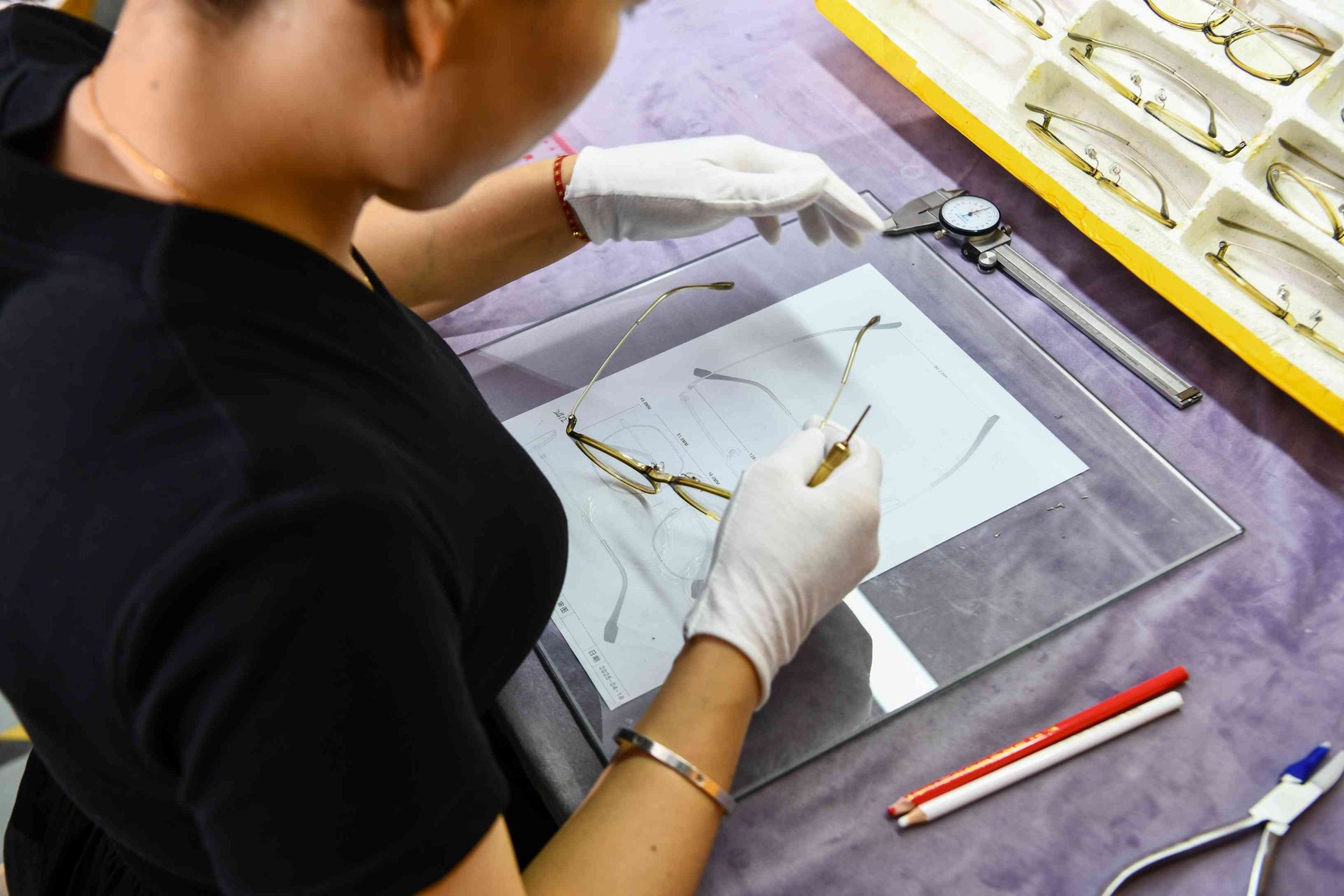
An online seller needs a process that connects customer information to the actual pair being produced. A prescription image alone does not necessarily provide every input required for the chosen lens or frame. Collect data through a defined workflow and make clear which party confirms the prescription, measurements and processing specifications.
Start with the Supported Product Configuration
Identify the frame model, color and size, then specify the lens design, material and agreed treatments. Single vision, progressive and other lens designs may use different order requirements. A supplier’s ability to process one configuration does not establish its ability to accept every prescription or lens option.
Ask your partner to confirm supported combinations and any orders requiring individual review. Frame dimensions and construction can affect compatibility and processing. Record the approved configuration so that both the listing and the production order refer to the same product.
Keep Right and Left Eye Data Clearly Identified
The order should preserve the prescription information for each eye without ambiguous abbreviations or unsupported substitutions. Depending on the order, the applicable fields may include sphere, cylinder, axis, addition and prescribed prism information.
The required information should follow the selected lens and processing instructions. If an entry is unclear or conflicts with another part of the order, obtain clarification from the responsible party before work begins. Fulfillment staff should not reinterpret an unclear prescription or turn an incomplete order into a new clinical prescription.
Confirm the Required Fitting Measurements
Ask which measurements the chosen lens requires and how those measurements should be supplied. Pupillary distance, fitting height and other wearing parameters may be relevant depending on the lens design and frame.
ZEISS explains that individualized lenses can use frame measurements and centration data, and that accurate inputs support the lens design. These requirements should be determined for the actual lens being ordered rather than copied from an unrelated product. ZEISS guidance on individualized lenses
The seller and the relevant eye care professional should arrange suitable prescription and measurement information. The processing partner checks whether the supplied order is complete and compatible with its production workflow. Those roles need to be agreed before launch.
Use an Order Record That Can Be Traced
| Order group | Information to define with the partner |
|---|---|
| Identification | Seller, unique order reference, product model and quantity |
| Prescription | Applicable right and left eye prescription fields and original record |
| Measurements | Required fitting data for the selected lens and frame |
| Product specification | Lens design, material, treatments, frame and approved configuration |
| Fulfillment | Packaging, destination, delivery instructions and approval status |
| Quality record | Agreed inspection items and the version released for processing |
Keep an approval history when an order changes. The production team should be able to identify the exact version that was approved, rather than relying on several conflicting messages.
Separate Data Review from Processing Time
An order can be received before it is ready for production. Define when the processing clock starts: for example, after required information, compatibility and commercial approval are complete under the agreed terms.
Set a clear point after which a cancellation or specification change may create additional work or costs. Keep lens production and assembly separate from carrier transit when communicating delivery expectations to customers.
Agree Inspection and Remake Responsibilities
Before dispatch, the partner should perform the checks agreed for the specific product and order. Inspection records should relate to the approved configuration and the actual processing work.
If a problem is reported, review the supplied data, approval history, manufacturing and delivery records. A changed prescription, corrected measurement, processing discrepancy and damaged parcel can require different responses. Set evidence requirements and responsibilities in advance, and assess the actual cause before allocating costs.
Customer prescription and delivery information should be accessible only to the parties that need it for the agreed work. Use appropriate access and retention arrangements, and remove personal information from public examples or screenshots.
Plan Prescription Fulfillment with HAO Eyewear
HAO Eyewear can review prescription-related fulfillment requirements alongside frame sourcing, lens processing, packaging and international shipping. Share your proposed lens types, frame range, order workflow and destinations so that supported configurations and responsibilities can be confirmed.
Explore prescription eyewear fulfillment and the order workflow. Validate approved configurations and representative trial orders before expanding the service.